
Traditionally, in many care settings, when someone living with a Dementia or on a cognitive journey became distressed, the response often focused on removing the person from the situation, redirecting them to their room or, in some cases, using medication if behaviours escalated significantly.
Modern dementia care has shifted towards understanding why a person may be distressed and using non-pharmacological approaches first; recognising that behaviour is often a form of communication rather than something to simply manage.
This is something the team at Thistle Court Care Home know well. When supporting family members (residents) through moments of distress. Rather than assuming someone needed to be alone in their bedroom, the team will ask a different question: what might this person need right now?
“Sometimes people weren’t asking to be alone,” Home Manager Sarah Butfield said. “They just needed something different around them. Something calming. Something familiar. Something to focus on.”
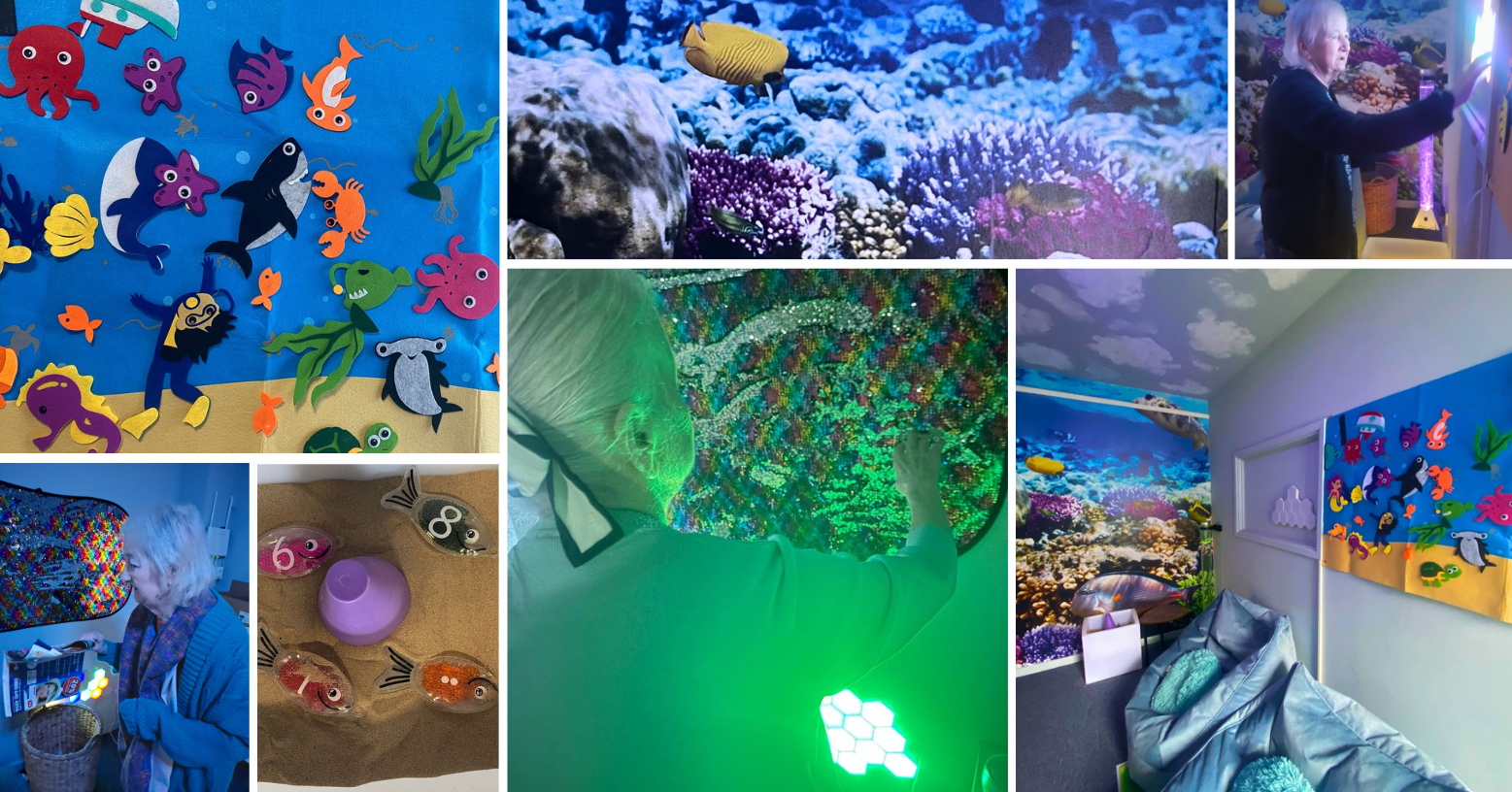
That thinking led to the creation of a dedicated sensory room within the Cwmbran care home, designed to support people through touch, sound, light and reassurance. The room was created with advice from Dementia UK, Alzheimer’s Society and local Community Psychiatric Nurses, helping the team carefully consider not only what might be engaging, but what would feel safe and accessible for different people.
Inside, a ceiling mural painted a team member called Rachel, there are sensory lights, textured materials, sequin boards, fidget items, soft furnishings and interactive features which can be adapted depending on the individual using the room. Everything is controllable and tailored around the person in front of them.
The home also created a sensory trolley so experiences could still be brought to people elsewhere in the home or garden if they were unable to access the room itself.
Since opening, the room has become part of everyday life at Thistle Court. For some, it offers a quieter space during moments of distress. For others, it has become somewhere to sit with relatives, have a cup of tea or listen to soothing music away from the noise and movement of the home.
One experience that stayed with the team involved the grandson of a family member living at the home. The young boy, who is autistic and has ADHD, initially found the environment overwhelming and struggled to stay for more than a few minutes during visits.
Now, visits take place in the sensory room. “He can stay for around half an hour comfortably now,” Sarah said. “That extra time means they get to properly be together.”
“Two years on and it’s still such an important space within the home,” Sarah said. “We’ve seen people spend longer with their families, we’ve seen people feel calmer, and we’ve seen how much difference the environment around someone can make,”
For more information about Thistle Court Care Home please visit Life’s Journey Continued – Thistle Court Care Home